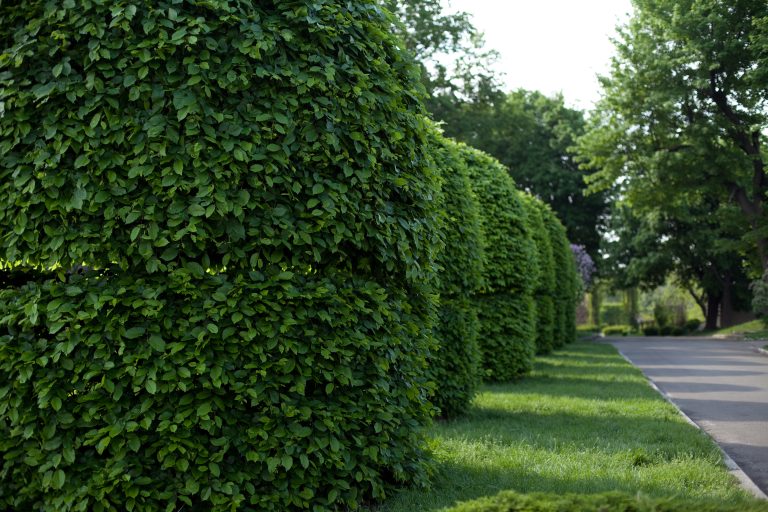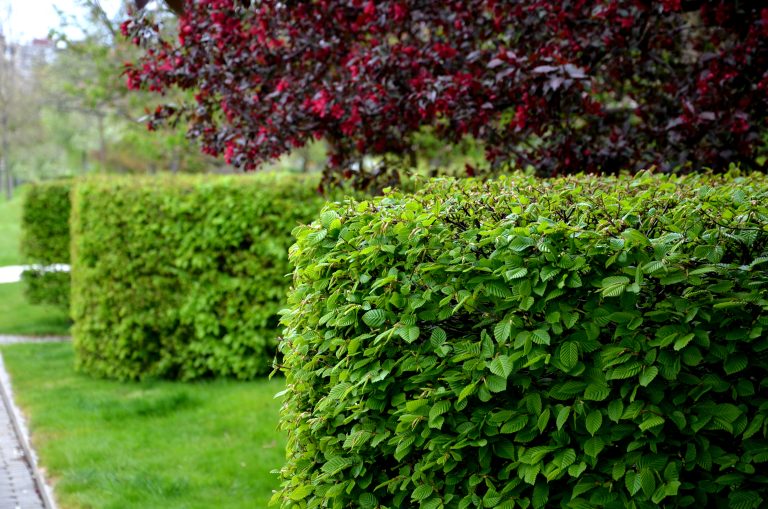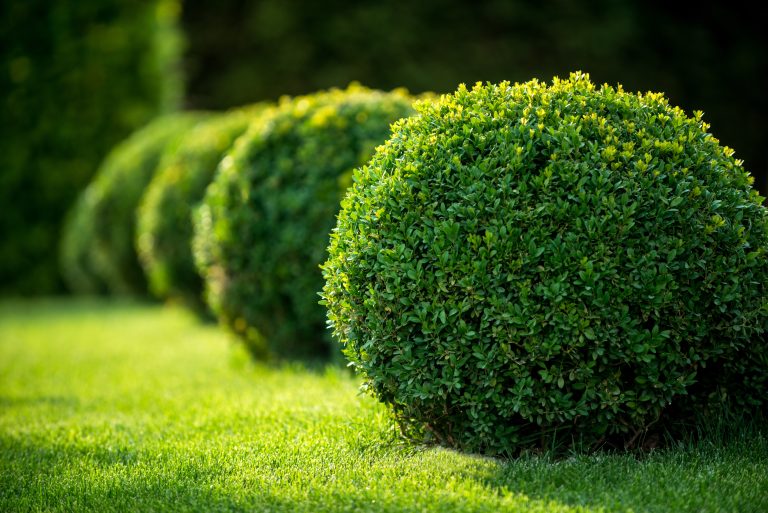
Bare-root/field-grown hedges are planted when they are dormant. Spring planting can be done once the frost has left the ground and up until June, provided they have been cold-stored so that growth has not yet started. Cold-stored hedges can look very “dull” with bare branches and sometimes white mould; this is nothing to worry about, as the mould is only on the moisture on the hedge and disappears when they are exposed to sun and wind. It can take up to four weeks for the leaves to emerge, depending on when in autumn they were harvested and when in spring they are planted. Autumn planting can be done when the plants have begun to enter winter dormancy, which usually happens in mid-October. In autumn, before natural leaf drop, the leaves have not fallen off, but they do so immediately after they have been lifted out of the ground. It may therefore seem that the plants (which are machine-harvested) are “ruffled”, and a lot of leaves may be in the packaging. However, this is completely normal. Container-grown hedges have an intact root system and can be planted throughout the growing season. However, the best time is early spring, in April, or late autumn, in October.
Planting a hedge
• Planting should take place within 2–3 days of delivery. Container-grown plants will keep for a few weeks. If you are unable to do this, the plants must be heeled in. You can place them in a shallow trench, in the shade, and cover with soil. Water regularly! • Dig a trench that is at least 40 cm deep and 40 cm wide. • Spread cow manure, approx. 1 bag (40–50 L) per 10 m, in the bottom of the trench. • Add soil improver to the excavated soil, approx. 100 L/10 m, as well as a few handfuls of cow manure per metre, and mix. If you have sandy soil, a moisture-retaining improver such as planting peat/soil is best. If the soil is clayey and hard, composted bark is best to create a loose soil structure. • Shovel the soil mix back into the trench until it is full (there is usually soil left over). • Stretch a string to get a straight line when planting. • Plant 3–4 hedge plants per metre of hedge. Make sure all roots are properly covered and press down gently. The plants should be 5–10 cm deeper than the branching point. • When all hedge plants have been planted, there should be a small hollow left in the trench. • Water generously and fill the hollow with water, then let it soak away. Repeat watering once more. • Now take the remaining soil and fill up so that you.
Upon delivery
• Unpack your plants immediately from the transport packaging.
• If you have purchased bare-root plants, they are delivered in bundles of 5, 10 or
25 plants per bundle; cut the string and separate the plants
carefully without damaging the roots.
• Place your bare-root/field-grown hedge plants in water
immediately. Leave them to absorb water for approx. 1 day before planting
and make sure all roots are thoroughly moist.
• Container-grown hedges need thorough watering of
the root ball.
• Store the plants as cool as possible and out of direct sunlight.
Care
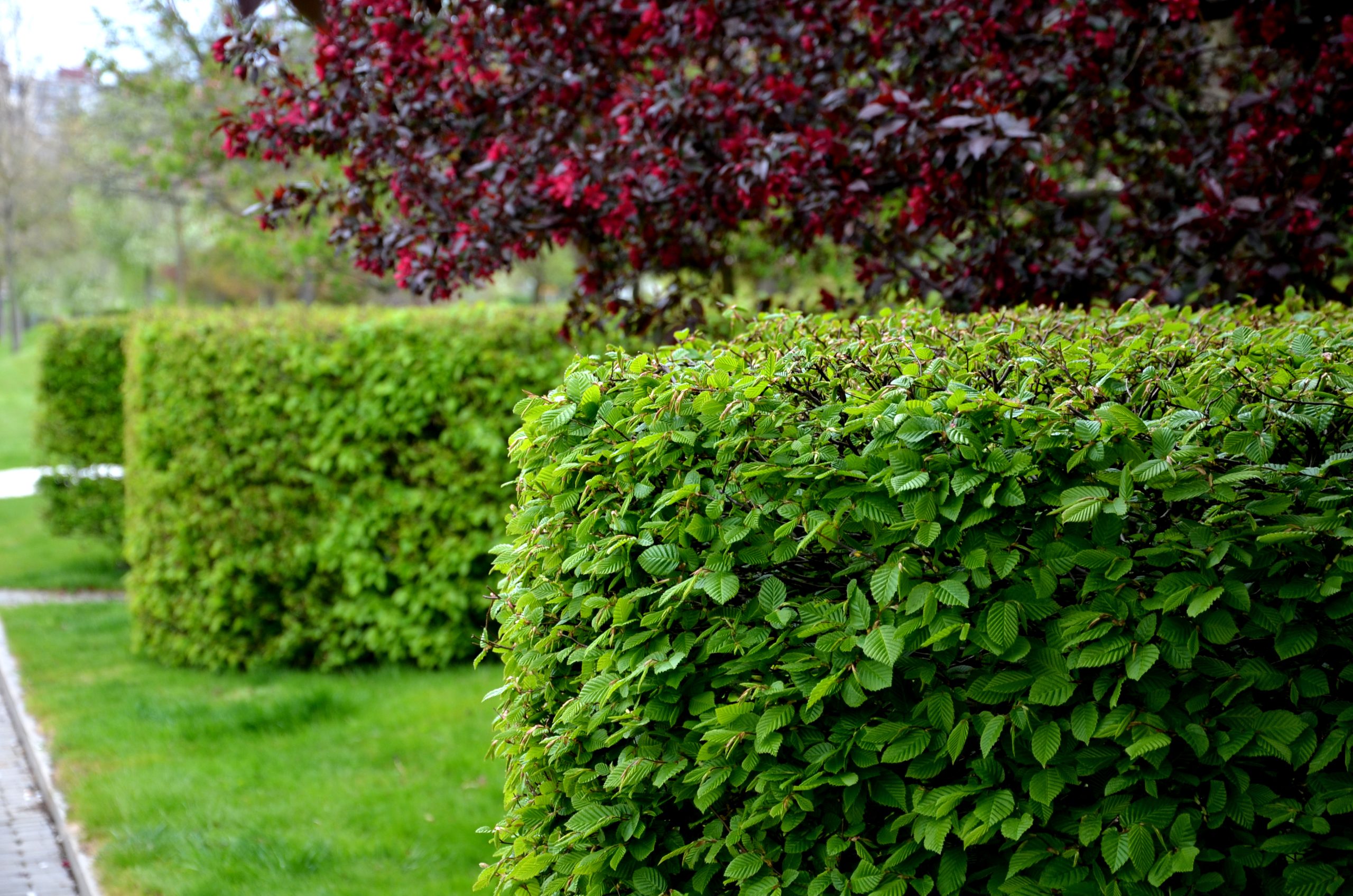
You must water at least once a week throughout the first summer. The hedge cannot form new roots and will die if it is too dry. It is very important that the water actually penetrates to depth. If you water 30 litres/m², the water will soak down about 30 cm. A really heavy shower often gives no more than 10 mm of rain, i.e. 10 litres/m². The water then penetrates about 10 cm into the soil, and that is not enough. The recommendation is to obtain a rain gauge, which makes it easier to check. If, on the other hand, it is too wet, no new roots can form either, and the hedge will die.
NOTE! Do not water every day or leave any irrigation hoses lying around dripping all day. Then it becomes too wet, and if the soil is waterlogged, no new roots can form either, and the hedge will die. Water thoroughly and at intervals so it has time to soak in. For autumn planting, give a thorough watering at planting and possibly once more; after that it usually takes care of itself. However, be aware that autumn can also be very dry!
Fertilising
No extra nutrients are needed the first year if the soil improvement has been done properly. Thereafter, fertilise early in spring and at the beginning of August with an all-purpose fertiliser such as Blåkorn. An annual application of compost or cow manure provides good humus content.
Pruning branched hedges
e.g. privet, alpine currant, cotoneaster, Siberian pea shrub, etc. You should trim 1–2 times per year according to the sketch below. For autumn planting, no pruning is needed, but in spring/for spring planting you cut the newly planted hedge down to approx. 20 cm above ground. This applies regardless of the height chosen at purchase. It may feel strange, but to achieve a sturdy, dense hedge this is necessary. The advantage of buying “larger” plants is a better root system and more branching. This gives better establishment and faster growth. Gradually prune into a pyramidal structure; the sides should always slope slightly inwards to try to get light to the entire hedge. Trim the hedge directly after any flowering so it has time to set buds for abundant flowering next year.