Once you have received your delivery, there are a few important things to keep in mind
- Unpack your plants immediately from the packaging.
- Potted plants should be watered directly in the pot.
- Bare-root plants should be placed in a water bath and preferably left to soak for 24 hours before planting.
- Store the plants in a cool place and out of direct sunlight.
- Planting should take place within 2–3 days of delivery. If this is not possible, the plants must be temporarily buried.
- Ensure all roots are covered with soil and that the soil is thoroughly moist. Water regularly.
TIPS!
For polyantha roses and large-flowered roses, prune branches to 10–15 cm, and for climbing and shrub roses to 20–25 cm.
Roses are fertilized twice a year (spring and summer). Fertilize newly planted roses only after they have started to grow.
In late autumn, add, for example, cow manure or special rose fertilizer, and to protect against winter cold, you can cover them with leaves or brushwood.
Roses
Roses thrive best in warm and sunny locations. The soil should be well-drained and nutrient-rich, preferably somewhat clayey. Our P-soil for roses contains both clay and the right nutrients.
- Let the roses soak in water for about an hour before planting.
- The planting hole should be dug approximately 40 cm deep and preferably one and a half times wider than the root system.
- Improve the soil with P-soil or cow manure, prune long roots.
- Spread the roots well in the planting pit; the graft union should be 10 cm below the soil surface.
- Fill with soil halfway, lightly tamp with your foot, and water thoroughly.
- The remaining soil is added once the water has drained.
Perennials
- Light and humus-rich soil is best for most perennial plants. Feel free to use U-soil for perennials when planting.
- Fertilize when the plants have established themselves and started to grow.
- Press the plants firmly when planting. Repeat watering twice a week during the initial period, especially if it is dry and sunny.
- Ensure the soil in the flowerbed is loosened.
TIPS!
Plant perennial plants in larger or smaller groups of the same variety. Place the tallest plants in the background. Combine plants with varying flowering times and flower colors. Bark mulch is excellent ground cover in perennial beds.
Climbing and Trailing Plants
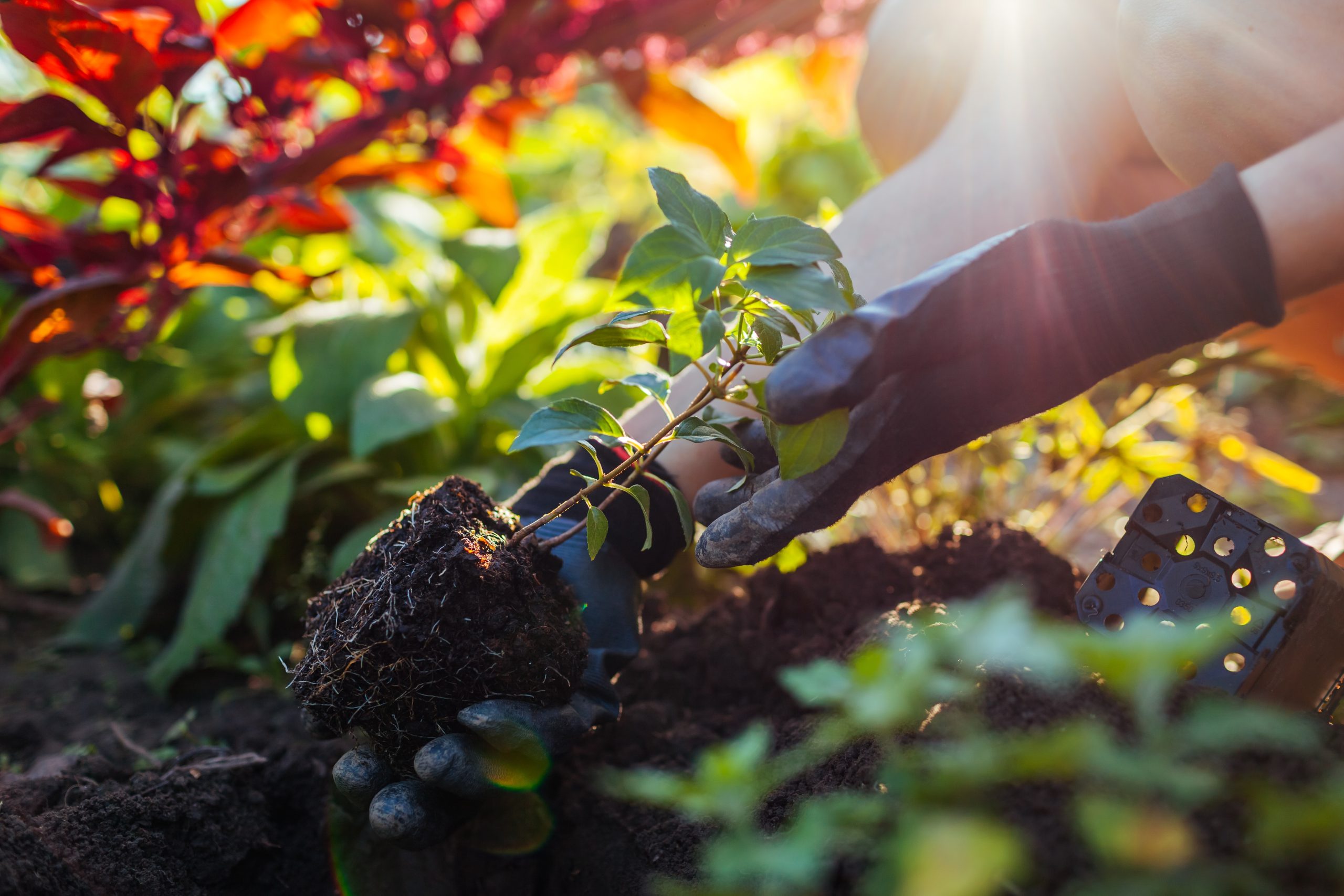
- Planting distance can be between 1–2 m depending on the variety’s vigor.
- Do not plant too close to house walls. Monitor watering extra carefully after planting.
- Plant shade-providing plants to protect the lower part of the plant from strong sun.
- Most climbing plants are pruned about 25 cm up to ensure good branching.
- Specifically for Clematis, it is important to plant deep enough to prevent the so-called “wilt disease”. The entire soil/root ball should be approximately 10 cm below the ground surface.
- Feel free to place clean gravel around the root collar.
Fruit and Ornamental Trees
- Planting depth is important when planting fruit and ornamental trees. Low on the trunk, just above the root, a root collar is visible, which is a trace from the grafting at the nursery. This root collar should be just above ground level when planting.
- Dig a generously sized planting pit, loosen the bottom.
- Drive in a support stake before planting the tree. The stake should reach the lower edge of the crown, preferably secured with a tree tie or similar.
- Fill with soil, preferably our P-soil or specified soil depending on the plant species. Tamp down and water generously.
- The soil surface around the trunk should be kept open for the first 4–5 years.
TIPS!
Trees with long annual shoots should be pruned before the first growing season. Select 3–4 well-placed branches plus the leader. Cut the branches 20–30 cm from the trunk, the leader shoots slightly lower. Remove all other branches completely.
Hedging plants
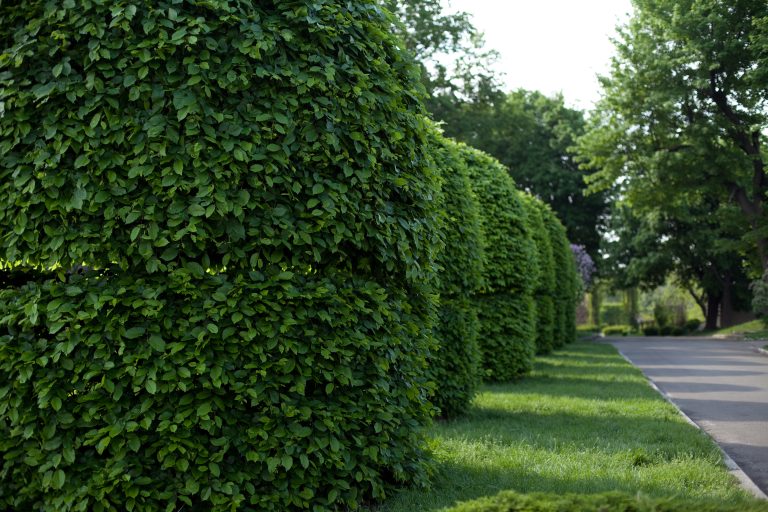
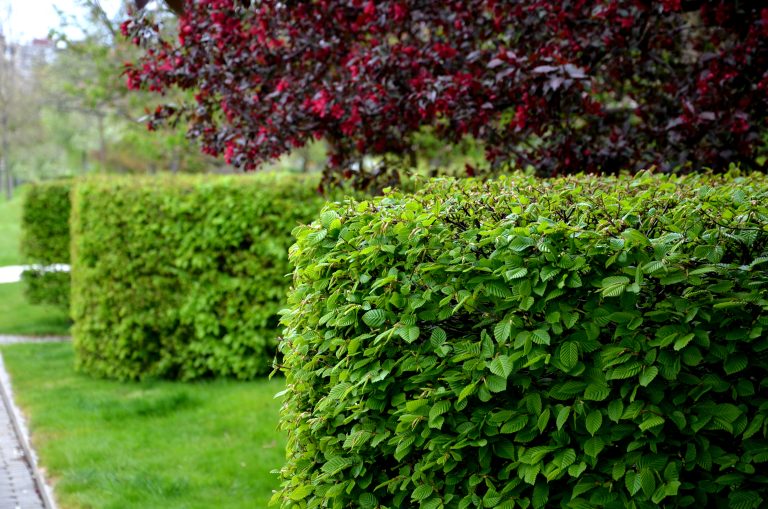
- Bare-rooted hedge plants are planted in March-June and in autumn during October-November. Potted plants can be planted throughout the growing season.
- Typically, 3 plants/meter are planted, but in some cases slightly sparser depending on species and size. Shaped hedges are planted more densely than free-growing ones.
- The soil depth should be at least 30 cm. Improve the soil with P-soil. Water generously. Prune at planting.
Rhododendrons, Azaleas, Heathers, and Blueberries
- This plant group thrives best in moist, humus-rich, water-retentive, and lime-poor soil. Preferably natural peat moss or rhododendron soil.
- Let the root ball soak in water before planting.
- Plant directly into the planting pit, which is filled with peat. Water thoroughly after planting.
- Feel free to cover the soil around the plants with leaves in autumn.
TIPS!
Rhododendrons are fertilized after flowering; use special fertilizer.