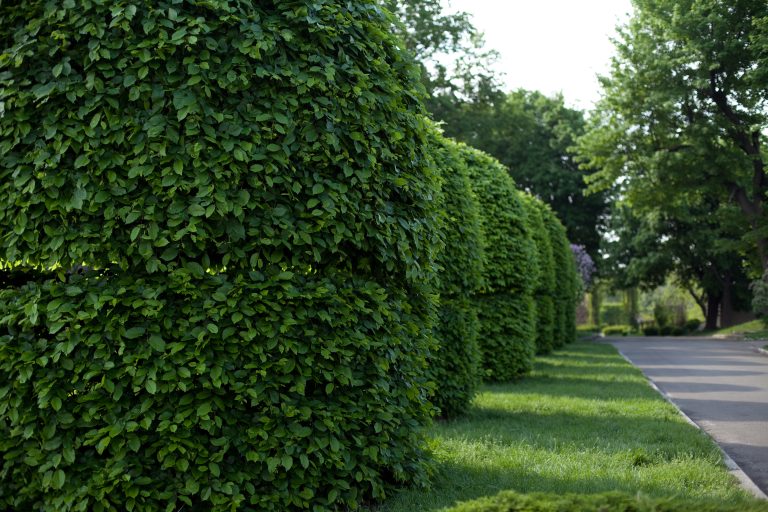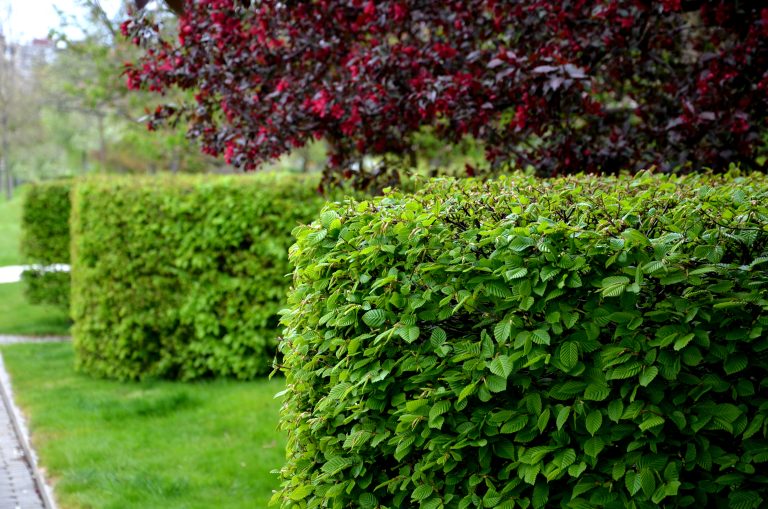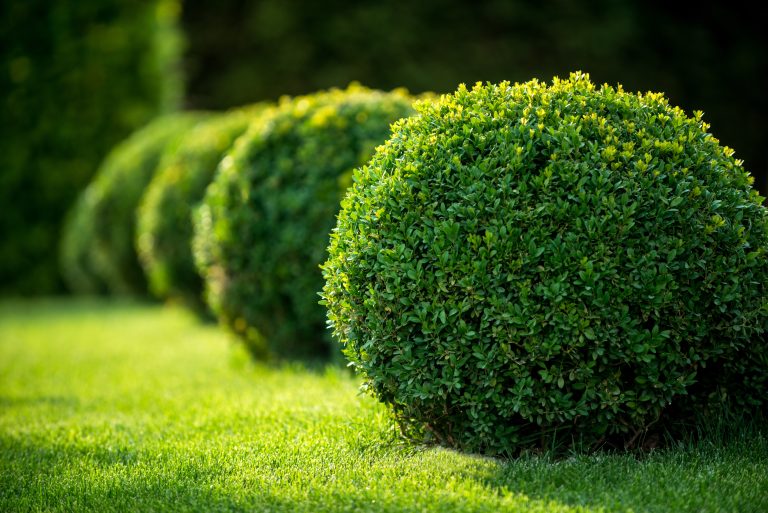
A boxwood hedge is a classic evergreen hedge. The foliage is dark green and leathery, with light green new shoots. Boxwood is primarily used as a low to medium-height hedge for borders and screening. It produces inconspicuous yellow-white flowers in April/May. Heavier pruning is done directly after the frost has left the ground, and trimming 1–2 times during the season. It has no major requirements regarding soil and site, and tolerates both drought and nutrient-poor soil well. However, it becomes significantly lusher if fertilised. It thrives in both sun and shade. Please protect newly planted plants from winter sun with spruce branches or shade cloth to prevent drying out
Planting distance
Planting distance for boxwood varies depending on whether the hedge is to be low (20–30 cm); you should have 5–6 plants per metre of hedge. The taller you want the hedge, the more you can space the plants out. For a 0.5 m high hedge, 4–5 plants per metre. If you are aiming even higher, 3–4 plants per metre is sufficient.
Planting a boxwood hedge
• Dig a trench that is at least 40 cm deep and 40 cm wide. • Spread cow manure, approx. 1 bag per 10 m, at the bottom of the trench. • Pour soil improver over the excavated soil, approx. 100 litres/10 m, and add a few handfuls of cow manure per metre, then mix. If you have sandy soil, a moisture-retaining improver such as planting peat/soil is best. If the soil is clayey and hard, bark humus is best for creating loose soil. • Shovel the soil mix back into the trench until it is full (there is usually soil left over). • Stretch a string to get a straight line when planting. • Plant 3–6 hedge plants per metre, depending on whether you want a low or taller hedge. Make sure all roots are properly covered and press down gently. The plants should stand with the branching point at ground level (the same depth as in the pot). • When all hedge plants are planted, there should be a small hollow left in the trench. • Water thoroughly, fill the hollow with water and let it soak away. Repeat watering once more. • Now take the remaining soil and top up so that you create a small ridge along the hedge planting. This keeps the topsoil loose and makes it easy to remove any weeds. Make sure you do not cover the leaves.
Upon delivery
• Unpack your plants immediately from the packaging.
• Water the pots thoroughly
Care
• You must water at least once a week throughout the first summer. The hedge cannot form new roots and will die if it is too dry. It is very important that the water actually penetrates deep into the soil. • If you water 30 litres/m², the water will soak down to about 30 cm. A really heavy downpour often gives no more than 10 mm of rain, i.e. 10 litres/m². The water then penetrates about 10 cm into the soil, and that is not enough. • The recommendation is to get a rain gauge, which makes it easier to check. • If, on the other hand, it is too wet, no new roots can form either, and the hedge will die. • Water thoroughly and at intervals so it has time to soak in. • For autumn planting, give a thorough watering at planting and possibly once more; after that it usually takes care of itself. However, be observant, as autumn can also be very dry!
Fertilising
Fertilise your hedge in early spring and at the beginning of August with granular garden fertiliser such as Blåkorn or similar to keep the hedge healthy, resilient, and growing well. Do not use lawn fertiliser, as it may contain substances that are harmful to the hedge.
Pruning
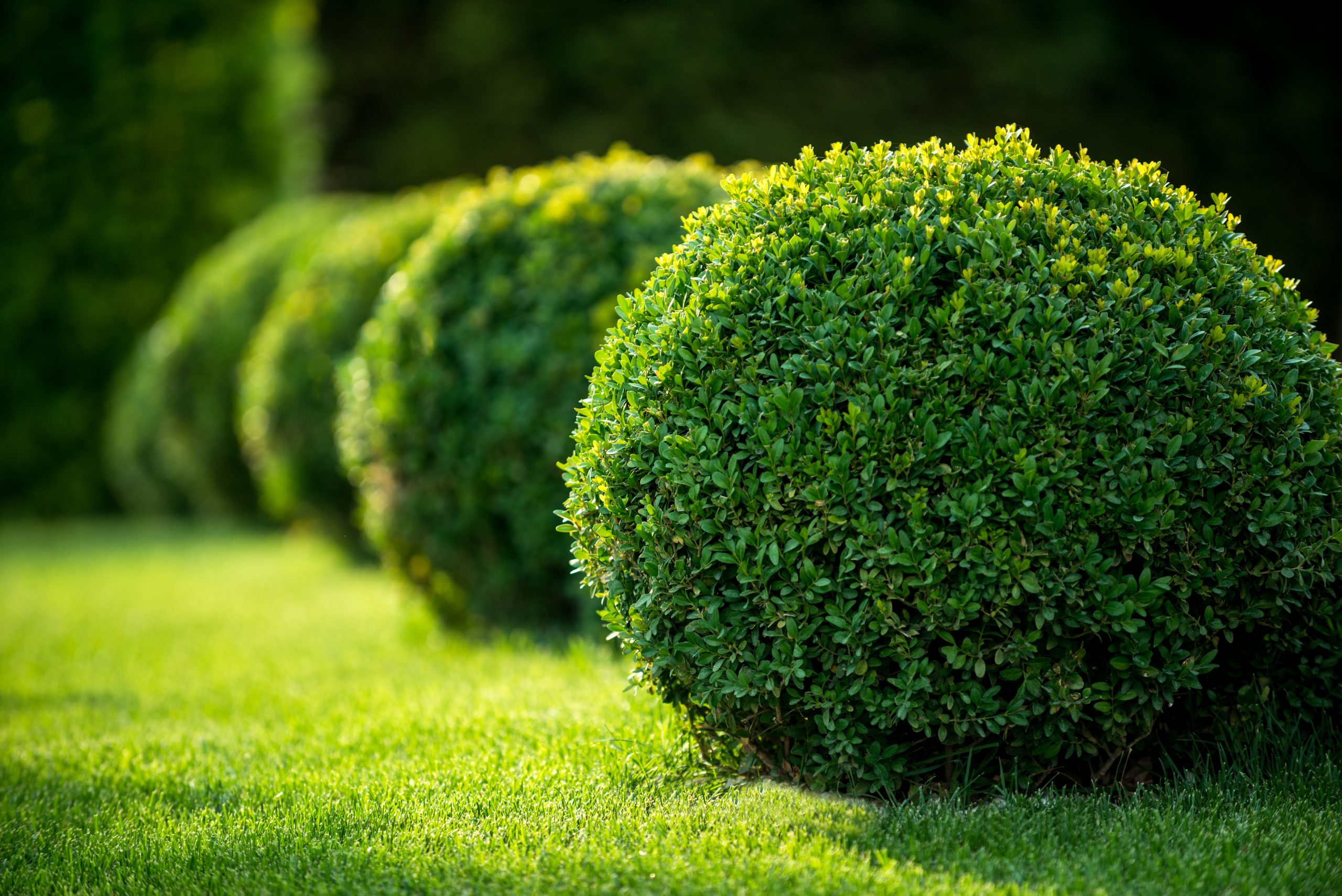
With autumn planting, no pruning is needed, but in spring you cut back the tops of the boxwood. To keep it lush and dense, you must trim the boxwood hedge at least twice a year, spring and autumn. September is the best month for autumn pruning, as boxwood needs time to recover before frost. Branches that are woody are not harmed by frost. Boxwood is very hardy and does not require much, but there are a few things to consider when pruning. It is not suitable to prune a boxwood hedge in sunshine; an overcast day is much better. If the weather turns sunny after pruning, the boxwood should be covered with shade cloth or similar to protect the open wounds from scorch damage, which can otherwise take a long time to heal. A few days is usually enough. There is a difference between spring pruning and autumn pruning. In autumn, you only trim back the current year’s shoots. Heavier pruning is better in spring, as boxwood more readily produces new shoots on woody branches. If you want a slightly taller hedge, it can be a good idea to cut it in a slightly pyramidal shape to allow light to reach as much of the hedge as possible.