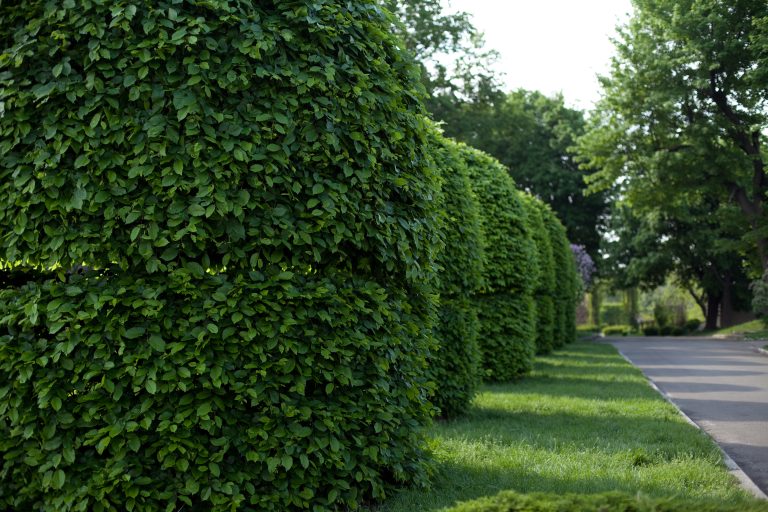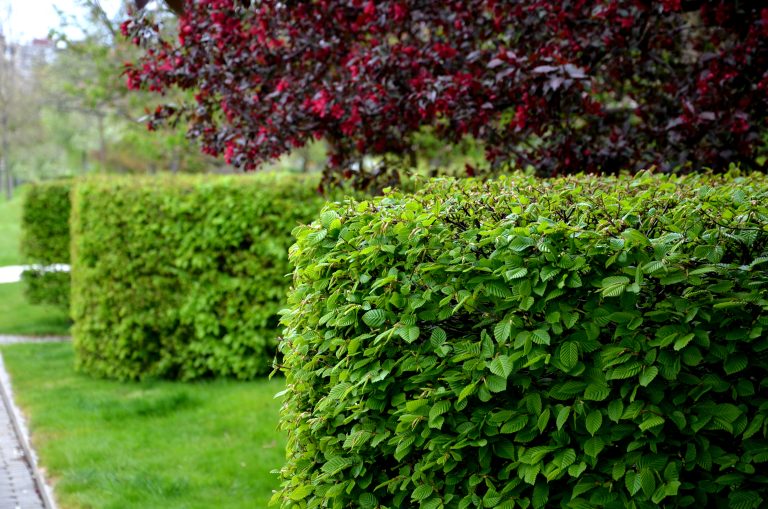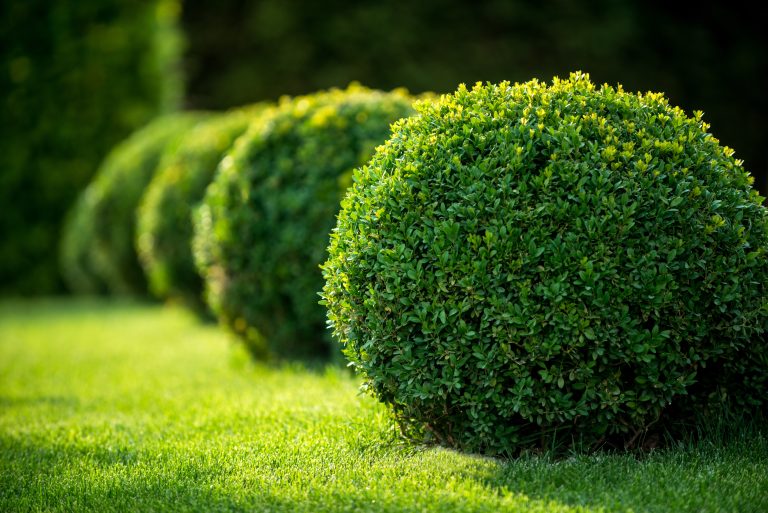
Bare-root/field-grown hedges are planted when they are in dormancy. Spring planting can take place from the time the frost has left the ground until the month of June, provided they have been kept in cold storage so that growth has not yet started. Cold-stored hedges can look very “dull” with bare branches and sometimes white mold; this is nothing to worry about as the mold only exists in the moisture on the hedge and disappears once exposed to sun and wind. It can take up to 4 weeks for the leaves to sprout depending on what time in the autumn they were harvested and when in the spring they are planted. Autumn planting can take place when the plants have begun to enter winter dormancy, which usually occurs in mid-October. In the autumn, before natural leaf fall, the leaves have not yet dropped but will do so immediately after being lifted from the soil. It may therefore appear that the plants (which are harvested by machine) are “disheveled” and many leaves may be in the packaging. However, this is completely normal.
Planting the hedge
• Planting should take place within 2-3 days of delivery. If you do not have the opportunity to do this, the plants must be heeled in. You can place them in a shallow ditch, in the shade, and pour soil over them. Water regularly! • Dig a ditch that is at least 40 cm deep and 40 cm wide. • Place cow manure, approximately 1 bag per 10 m, at the bottom of the ditch. • Pour soil improver over the excavated soil, approximately 100 liters/10 m, as well as a few handfuls of cow manure per meter and stir. If you have sandy soil, it is best to use a moisture-retaining improver such as planting peat/soil. If the soil is clayey and hard, bark mulch is best for creating loose soil. • Scoop the soil mixture back into the pit until it is full (there is usually soil left over). • Stretch a string to get a straight line when you plant. • Plant the hedge plants 3-4 per meter of hedge. Ensure that all roots are properly covered and press down gently. The plants should stand 5-10 cm deeper than the branching point. • When all the hedge plants are planted, there should be a small hollow left in the ditch. • Water abundantly, filling the hollow with water and letting it sink in. Repeat the watering once more. • Now take the remaining soil and fill it in so that you get a small ridge in the hedge planting. This makes the soil loose on top and makes it easy to clear away any weeds.
Upon delivery
• Unpack your plants immediately from the transport packaging. • Place your bare-root/field-grown hedge plants in water immediately. Let them soak for about 24 hours before planting and ensure that all roots are thoroughly moist. • Store the plants as cool as possible and away from direct sunlight.
Maintenance
You must water at least once a week throughout the first summer. The hedge cannot form new roots and will die if it is too dry. It is very important that the water truly reaches down to the depths. If you water 30 liters/sqm, the water will sink down about 30 cm. A very heavy rain shower often provides no more than 10 mm of rain, i.e., 10 liters/sqm. The water then penetrates about 10 cm into the soil, which is not enough. The recommendation is to acquire a rain gauge to make it easier to monitor. If, on the other hand, it is too wet, no new roots can form either and the hedge will die. Water thoroughly and at intervals so it has time to be absorbed. For autumn planting, give a thorough watering at the time of planting and possibly once more; after that, it usually takes care of itself. But be observant, as even the autumn can be very dry!
Fertilising
No extra nutrients are needed the first year if the soil improvement has been done properly. Thereafter, fertilise early in spring and at the beginning of August with an all-purpose fertiliser such as Blåkorn. An annual application of compost or cow manure provides good humus content.
Pruning branched hedges, Goliat Privet, Ribes, Caragana
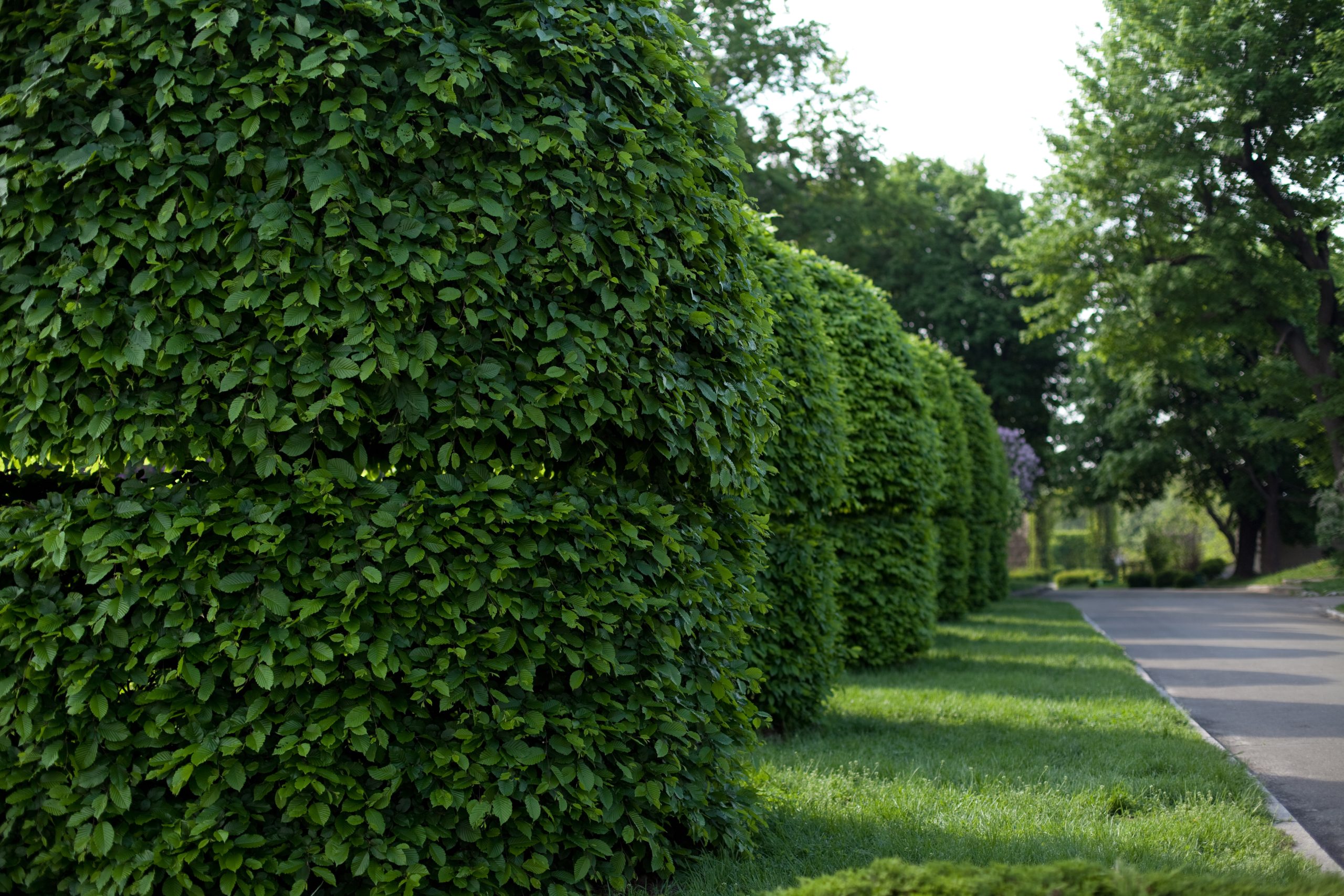
The advantage of buying “larger” and slightly older plants is a better root system, more branching, and better density. This means that within a couple of years, with the right care, you will have a finished hedge. For autumn planting, no pruning is necessary. In the spring/early summer, gradually prune to create a pyramid-shaped structure. The sides should always slope slightly inwards to try to get light to the entire hedge. Prune 1-3 times during the season as needed.